
Hay baler crack repair near Prairie
Pre-Season Crack Repair on a Hay Baler
This hay baler crack repair was a planned, pre-season asset repair for Warieoo Farms, done in the farm’s workshop near Prairie. Troy confirmed the cracks with dye penetrant testing and found more than the farm had spotted. He ground them out and MIG welded them, and the baler was back in working order before the season.
Job at a glance
Read time
6 min read
Job location
Prairie, Victoria
Job brief
Pre-season crack repair on a hay baler
Materials: mild steel · Finish: painted by the farm · Work done: on site, in the farm’s workshop
The brief
What Did the Customer Need?
Warieoo Farms needed one of their hay balers checked and repaired before the season. During pre-season servicing, the farm’s team found a crack, got in touch with Troy and sent him a couple of photos. There was no hard deadline. They wanted it sorted before the baler went back to work, so they booked a day that suited everyone.
This area of the baler is known for cracking, so the farm gives it extra attention through the baling season and at pre-season maintenance. That’s how this one was caught early.
Troy starts every job like this the same way: a conversation, then a few photos. A picture shows him where the crack sits and what’s around it, which a description over the phone rarely does.

The repair
How Did Troy Tackle the Hay Baler Crack Repair?
Troy wire-wheeled the paint off, then used dye penetrant testing, a hands-on trade method, to show exactly where each crack ran. He ground the cracks out, re-checking with developer as he went. Then he drilled a hole at the end of each crack to stop it spreading and MIG welded the repair.
Cracked paint is usually the first telltale, so the paint comes off first. With bare steel showing, Troy runs a three-step test with a ROCOL Flawfinder crack detection kit. He sprays on the cleaner, then the red dye penetrant, and leaves the dye for about 15 minutes. Next he wipes it off and sprays on the white developer. The developer draws the dye back out and shows the crack as a pink line.
The dye stays in the crack, and that’s the useful part. As Troy grinds along each crack with a die grinder, he keeps spraying developer. The line keeps showing until he has followed the crack to its end. There he drilled a hole to stop it running any further, then welded from that point.
What went into it?
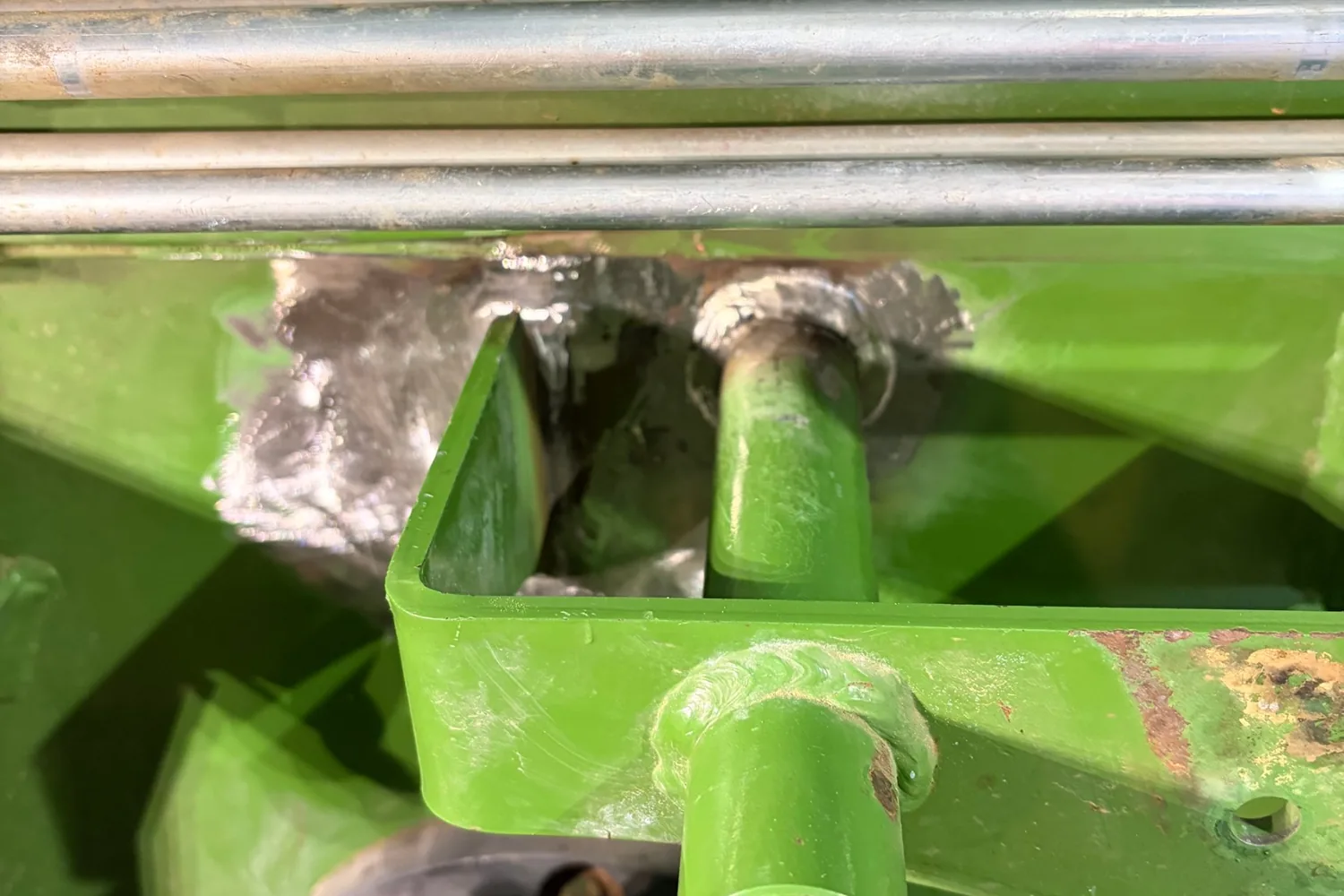
No new steel. This was a straight crack repair in mild steel, with the weld the only material added. Nothing was laminated or braced, at the farm’s request. Space is also tight around this part, which limits how much extra plate or bracing it can take.
Which welding processes did Troy use?
MIG only. The rest of the kit was simple: a wire wheel to strip the paint, a die grinder to chase out the cracks and a drill for the stop holes. The Flawfinder kit’s cleaner, dye penetrant and developer did the crack testing.
Problem solving
What Challenges Came Up, and How Were They Solved?
The cracking was more extensive than the farm’s team thought. They had spotted one crack; the dye test showed a second in the same area of the same part. Troy treated both the same way, chasing each one out with developer until nothing showed, then welding them up in one visit.
Getting to the area took some preparation. The farm’s mechanic had the covers off before Troy arrived, though Troy can do that himself when needed. The baler was also hitched to the tractor for the work.
The finish
How Was It Finished?
Troy left the welds dressed and in bare metal, and the farm’s team took care of the paint. He paints repairs himself when a job needs it. The baler went back to work before the season, with a plan in place if the area ever cracks again.
This was a repair-and-monitor job. The area keeps getting extra attention through the baling season and at each pre-season service. If it cracks again, the next step is lamination: an extra layer of plate to strengthen it, fitted to the space available.
Location
Where Was This Job?
Troy did this hay baler crack repair on site, in the Warieoo Farms workshop near Prairie, in the Loddon Shire north of Bendigo. He regularly services Greater Bendigo and reaches further for emergency and on-site work. Get in touch to confirm he can get to you.
Photos
What Did the Job Look Like, Start to Finish?
The photos run in order, from the red dye showing the first crack to the finished welds, ready for the farm’s paint. Swipe, scroll or use the arrows to move through them.
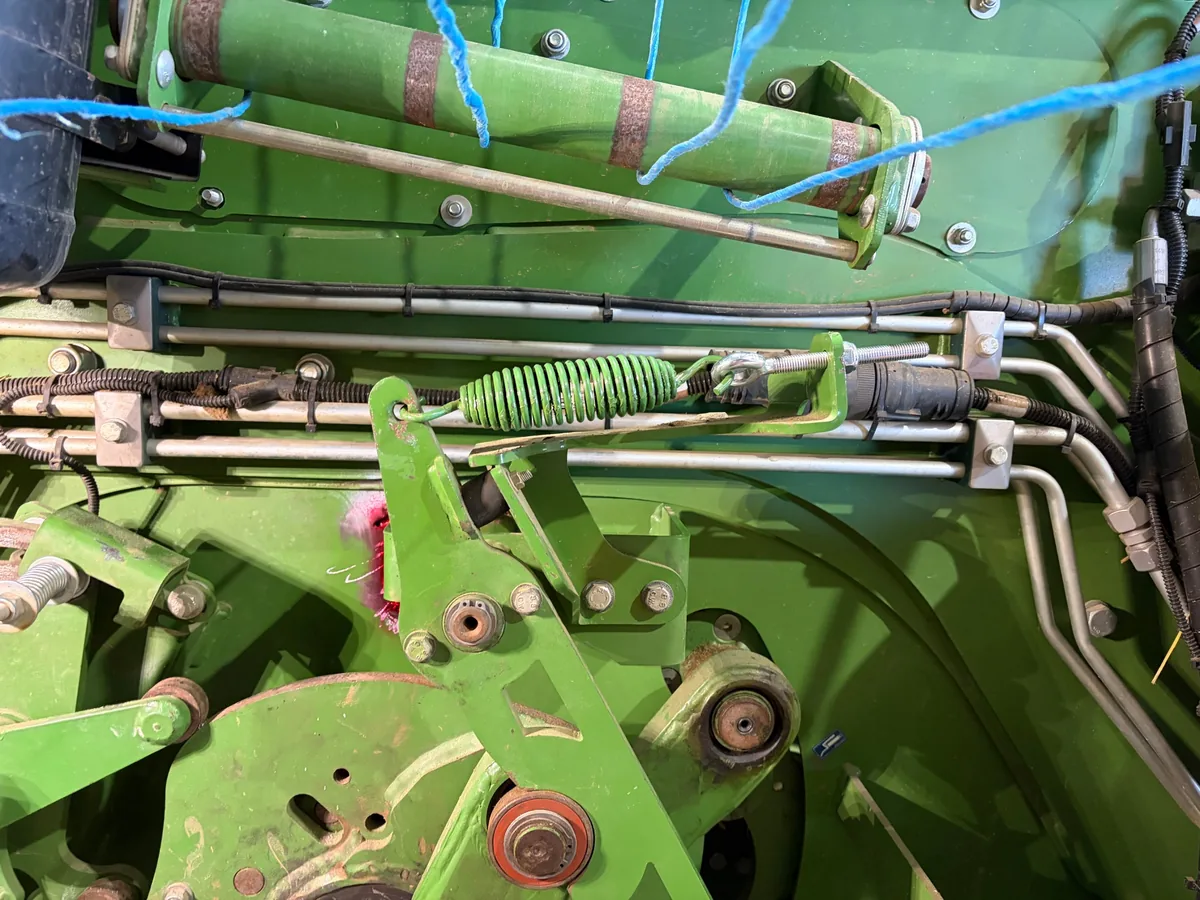
Before. Red dye penetrant on the cracked area beside the bracket, on the side of the baler. 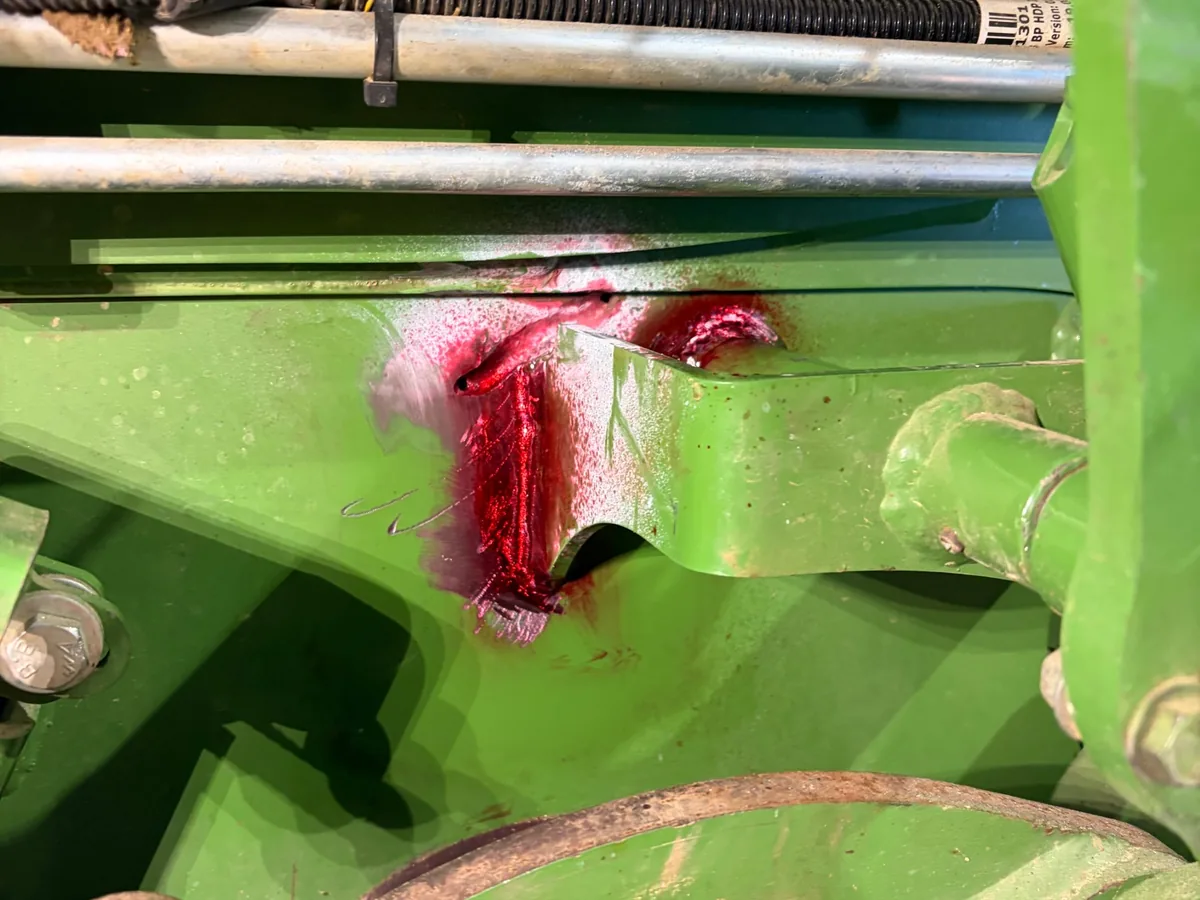
Before. Closer in: the dye sits in the crack running down beside the bracket. 
During. White developer draws the dye back out, showing the crack as a pink line. 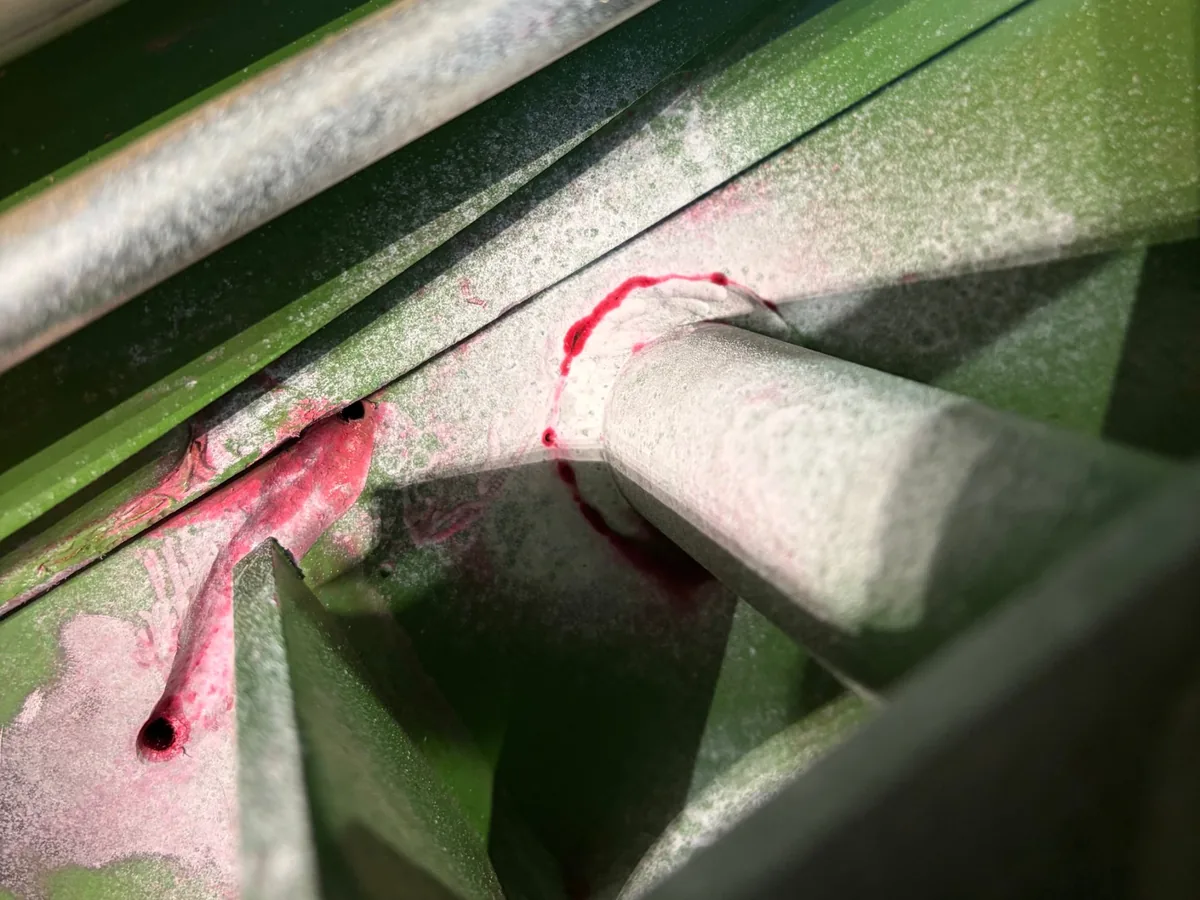
During. Developer also showed cracking around the base of the pin, the crack the farm hadn’t seen. 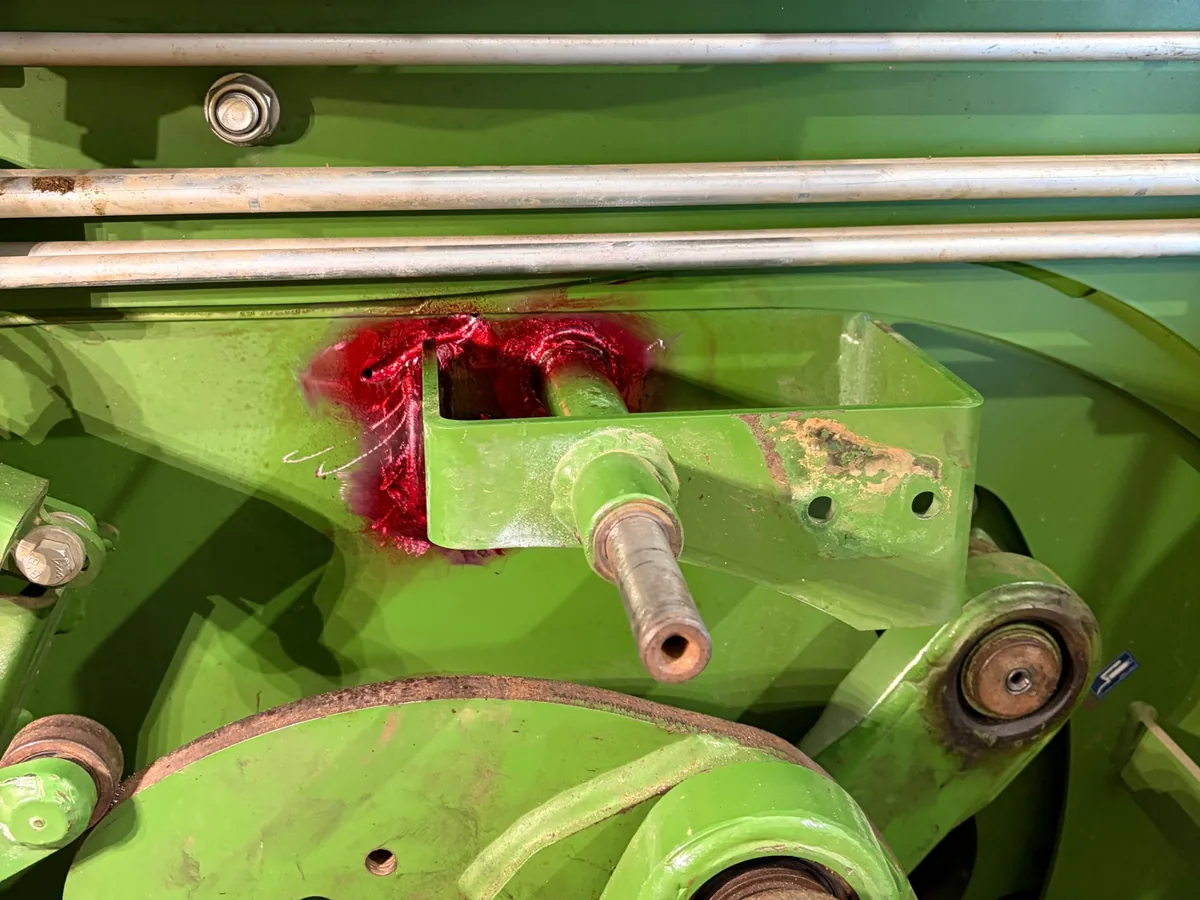
During. Dye on again partway through grinding, checking whether any of the crack was left. 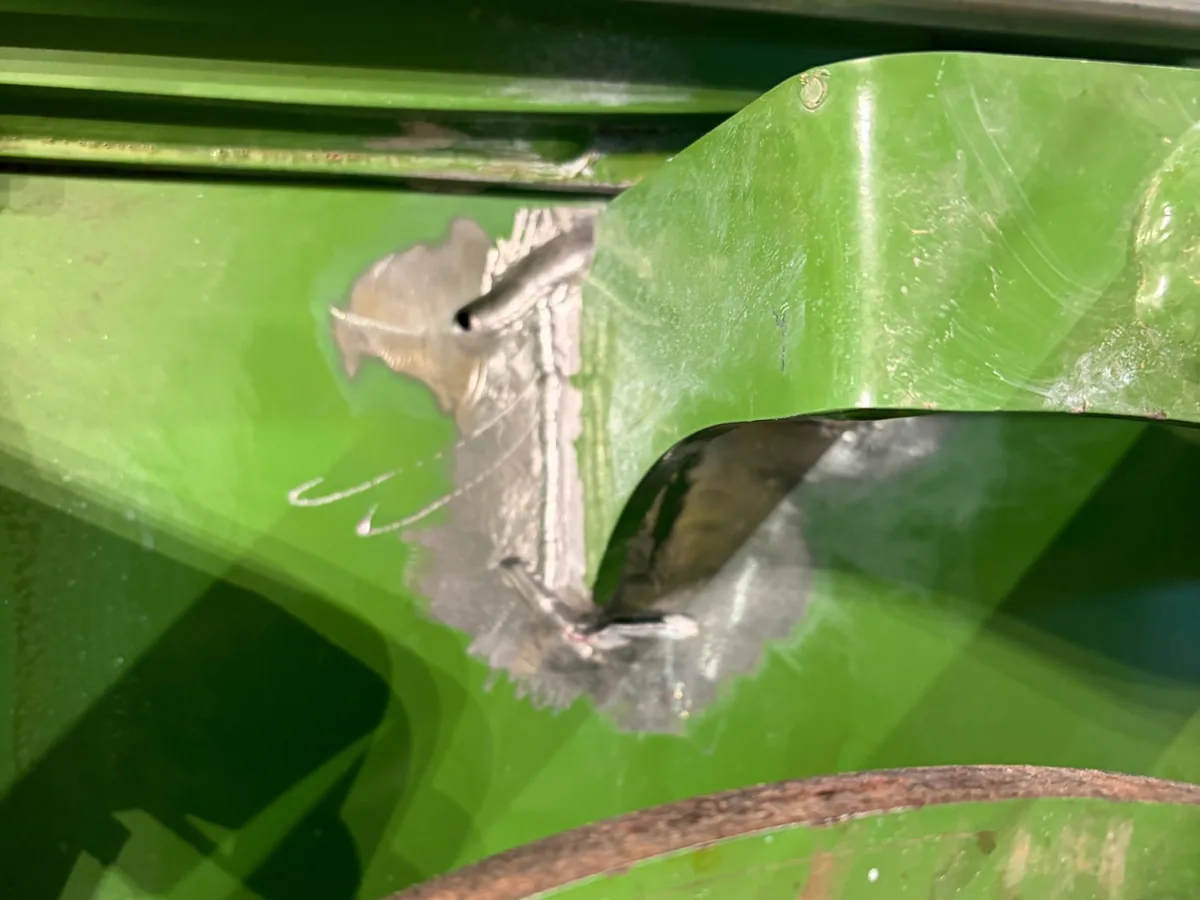
During. The first crack ground out and welded beside the bracket. 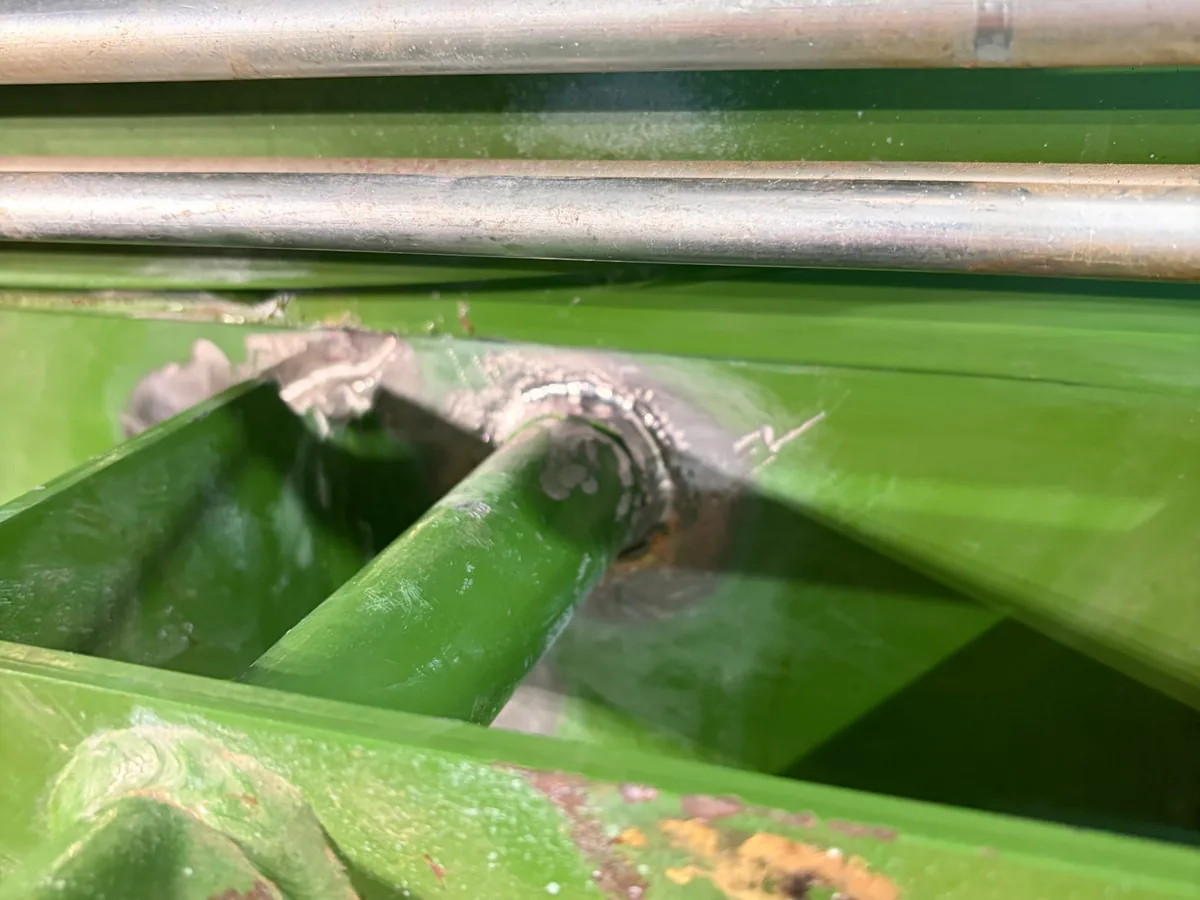
During. New weld around the base of the pin, where the second crack was. 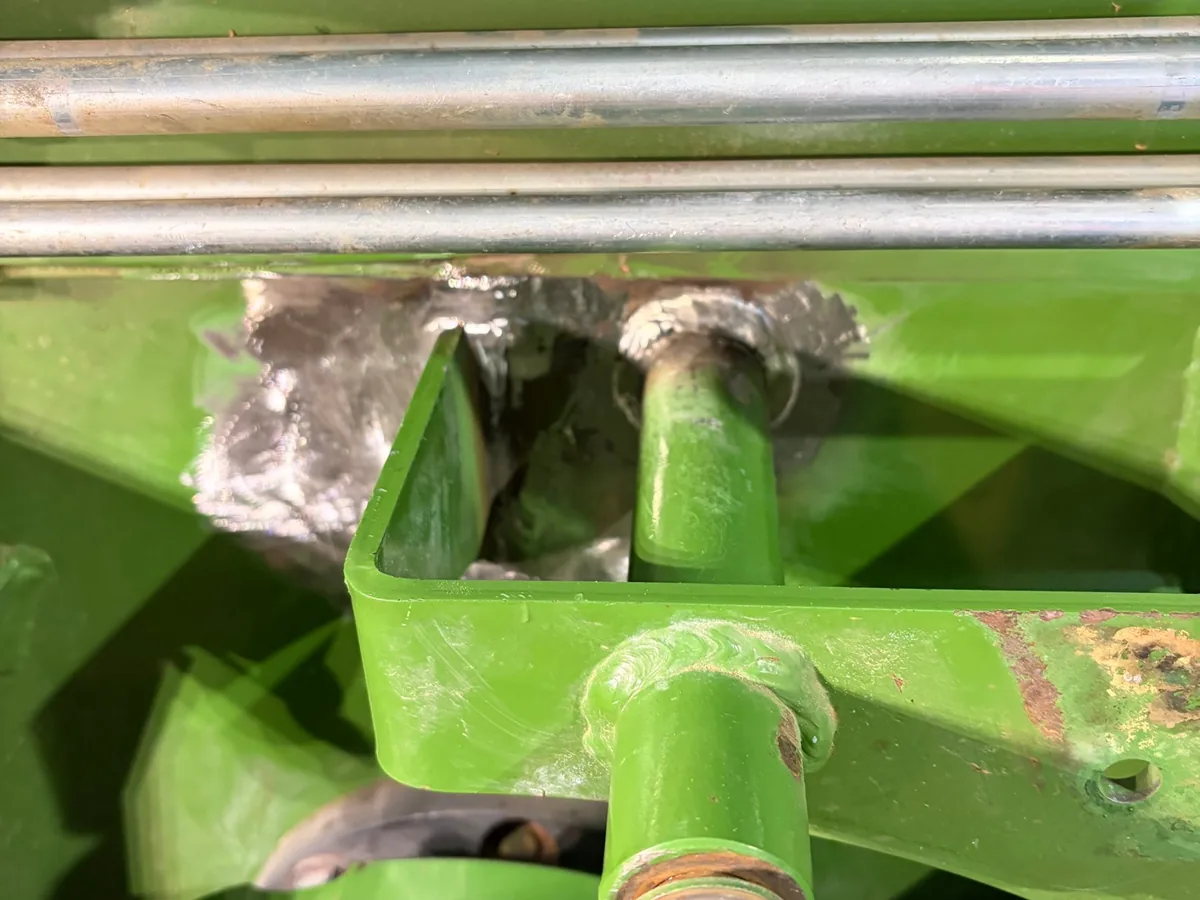
After. Both repairs finished and dressed in bare metal, ready for the farm’s paint. 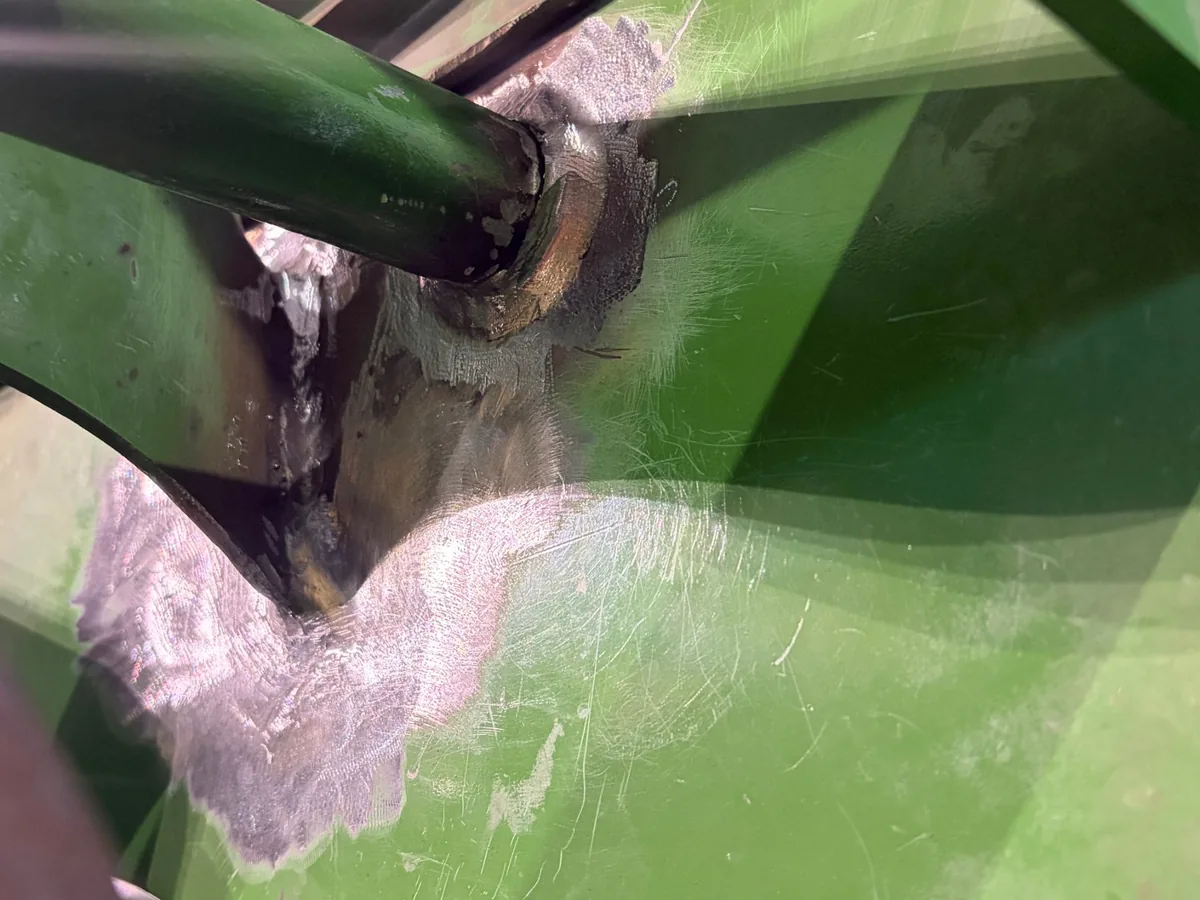
After. A close look at the finished welds around the pin and bracket.
Quick answers
Questions People Ask About Cracked Farm Machinery
How can I tell if my baler or other machinery has a crack?
Cracked paint is usually the first sign. Paint splits along a crack in the steel underneath, so look closely around welds, brackets and pivot points during servicing. If you find one, send Troy a photo. He confirms how far it really runs with dye penetrant testing, a hands-on trade method.
Why drill a hole at the end of a crack?
To stop it spreading. A crack ends in a sharp tip, and that tip is where it keeps growing under load. Drilling a small hole right at the end rounds the tip off. Troy follows the crack to its true end with dye penetrant testing and the grinder, drills the hole there, then welds the repair.
When’s the best time to get a baler checked for cracks?
Before the season, while it’s parked up for servicing. That’s when cracks tend to be found, usually as cracked paint, and there’s time to book a repair on a day that suits. Planned work runs Monday to Friday. If something cracks mid-season instead, Troy is on call 24/7 for breakdowns on 0438 476 206.
Do I need to take the covers off before Troy arrives?
No. Troy can take guards and covers off himself as part of the job. If your own mechanic has time to do it beforehand, that works too. Either way, email a few photos to midlandmetalworks@gmail.com first. Troy will tell you what needs to come off and whether the machine should be hitched up.
Ready when you are
Machine Down? Talk to Troy.
Found a crack in a baler or other farm machinery, before the season or in the middle of it? Email Troy a few photos and he can give you an informed price indication, then every job is invoiced line by line.
Got a Job to Talk Through?
Machine down? Call Troy on 0438 476 206. For everything else, tell us what needs doing and where, and he’ll get back to you.
Prefer email — or have photos, plans, diagrams or schematics to share? Send them straight to Troy at midlandmetalworks@gmail.com.